Battery tester vs multimeter: which question are you trying to answer?
A multimeter measures voltage; a compatible battery analyzer can also assess battery condition. Those are different checks. Some automotive multimeters can record starting or charging readings too, so check your exact model’s functions before buying another tool.
Editorial decision map — not a universal manufacturer verdict
Situation
What matters
Next check
You already have a suitable multimeter and want to check voltage
Use the instrument’s documented voltage function and record conditions
Do not buy a battery tester solely to repeat a voltage observation
You need a battery-health report or CCA estimate
Confirm the analyzer’s chemistry, rating input and published method
A displayed voltage alone is not the same report
You need to observe a starting or charging event
Check whether your exact instrument supports that job
Do not assume every multimeter lacks it or every battery tester includes it
Your procedure explicitly requires an applied-load test
Verify the required load method and operating procedure
Neither a voltage-only reading nor a conductance estimate is an automatic substitute
What changes the decision?
Start with what you still need to know: voltage, battery condition, starting, charging, or the response to an applied load.
The following is our editorial interpretation, not a remote fault diagnosis or hands-on test report.
Keep an existing meter useful without asking it the wrong question
Fluke documents battery-voltage checks using an automotive multimeter, including voltage observations in a vehicle system. That supports a useful measurement role; it does not mean a generic voltage reading supplies a battery analyzer’s verdict. Check the exact model and manual before paying for a second device to repeat a function you already have.
Compare the output you need, then the method
Do you need a voltage observation, a battery-condition report, a starting-event record or evidence from an applied load? Write that requirement first. The method guide separates conductance and true load; this page instead helps decide whether another tool category adds the missing evidence. They are two decisions in sequence, not competing definitions of load testing.
Find a tester for the check you still need
Battery health is an optional starting filter, not a prefilled conclusion about your vehicle. Add cranking or charging only when that is the observation you need, and keep battery voltage separate from vehicle-system voltage. A printer changes reporting workflow, not the meaning of a voltage reading. Product capabilities remain separate from merchant links.
A practical check sequence
Use a multimeter’s DC-voltage function for the voltage question only, following its manual and the vehicle’s designated low-voltage test points. Never place current-mode leads directly across a battery.
Choose a compatible battery analyzer when you need a manufacturer verdict or an estimated starting-capability report. Do not expect a voltmeter to produce CCA or a tester to locate every wiring fault.
Avoid buying overlapping functions: first check whether equipment you already own can answer the specific question safely.
If you choose to check it yourself
Buying a tester is optional. First identify the unanswered check and follow the battery, vehicle and instrument manuals. These are capability examples, not a performance ranking or a substitute for inspection.
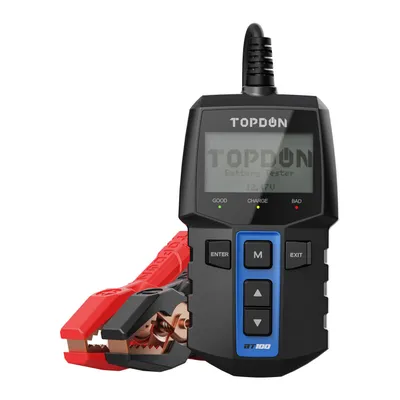
TOPDON BT100
12V batteries; 12V systems. Conductance.
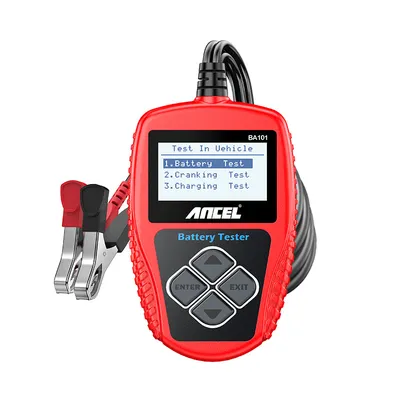
Core DIY 12V battery + cranking + charging. Skip this model if your required voltage, chemistry, test method or reporting output is absent from its specification.
12V DIY diagnostics + PC print/export. Skip this model if your required voltage, chemistry, test method or reporting output is absent from its specification.
Explicit variable-load carbon-pile method, contrasted with manufacturer-described conductance. Not a buying recommendation.
Follow the vehicle, battery and equipment manuals. Stop work for leakage, swelling, unusual odor, heat or smoke. A battery-test voltage rating is not a vehicle-system voltage rating.