Car battery keeps dying: what a GOOD battery result cannot settle
A GOOD battery result does not rule out every cause of repeated discharge. Check what the instrument tested, then describe when the symptom returns; the vehicle may need inspection beyond the battery.
Editorial decision map — not a universal manufacturer verdict
Situation
What matters
Next check
Flat again after parking
Parking interval, usage changes and the preceding charge/test
Ask about vehicle-side inspection; a battery pass is not a parked-drain investigation
Problem returns after charging
Whether charging was completed and what symptoms changed
Keep the sequence with the report instead of repeatedly testing the same unprepared state
Recently replaced battery; same complaint
Whether the symptom and usage conditions stayed the same
Do not assume another replacement is the only next action
GOOD battery result; starting still unreliable
Exact test performed and the functions the instrument supports
Separate battery, starting and charging questions; preserve unresolved faults for inspection
What changes the decision?
The interval and conditions of recurrence matter more than repeatedly reading the same battery verdict. A charging check is not a complete parked-drain investigation.
The following is our editorial interpretation, not a remote fault diagnosis or hands-on test report.
A repeated event needs a timeline, not another isolated pass
Interstate lists discharge causes involving both use and vehicle electrical loads. For a recurring complaint, note whether it happened after parking, after charging or after replacement, and what changed since the previous occurrence. These details help a technician investigate. They do not prove a parasitic drain, alternator fault or defective new battery.
Check the scope of the GOOD result
Midtronics lists battery conductance and starting/charging checks as different functions. Retain the test name and settings with GOOD. Even a combined tester is limited to its documented checks; it does not establish that every intermittent fault or parked electrical load has been investigated.
Choose a tester only if it answers the remaining question
If battery health is already assessed, repeating that one function may leave the original question unanswered. The optional combined Finder route requests battery, cranking and charging capability; it is not a drain-detector filter. Ask for inspection when the unresolved question needs equipment or expertise outside those functions.
A practical check sequence
Build a timeline: parking interval, previous charging, replacement date and the recurrence. Do not keep interpreting every event as an isolated flat battery.
Keep a GOOD battery report, but name the test performed. It does not establish that parked electrical consumption or an intermittent connection has been investigated.
For recurrence after charging or replacement, ask for vehicle-side inspection. Do not disconnect live wiring or improvise a current-drain test from this guide.
If you choose to check it yourself
Buying a tester is optional. First identify the unanswered check and follow the battery, vehicle and instrument manuals. These are capability examples, not a performance ranking or a substitute for inspection.
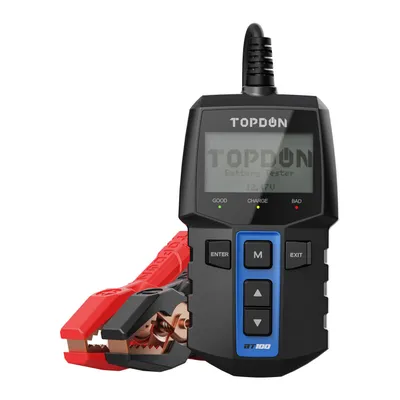
TOPDON BT100
12V batteries; 12V systems. Conductance.
Core DIY 12V battery + cranking + charging. Skip this model if your required voltage, chemistry, test method or reporting output is absent from its specification.
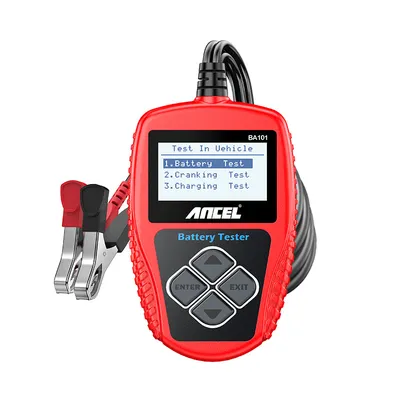
12V DIY diagnostics + PC print/export. Skip this model if your required voltage, chemistry, test method or reporting output is absent from its specification.
Battery conductance and starting/charging system tests are separate functions. Not a product recommendation.
Follow the vehicle, battery and equipment manuals. Stop work for leakage, swelling, unusual odor, heat or smoke. A battery-test voltage rating is not a vehicle-system voltage rating.