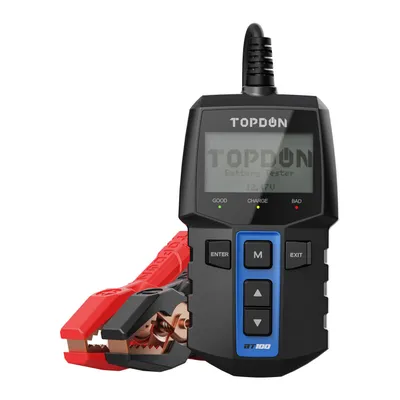
TOPDON BT100
Handheld battery-health plus cranking checks for supported 12V lead-acid batteries.
Not a charger, an actual 24V battery analyzer or a true physical load tester.
View capabilities and limitations →Cold weather can expose a battery that already has little starting margin. It does not, by itself, establish permanent deterioration: low charge, a poor connection or a vehicle-side problem may still be involved.
Compare the cold-start symptom with recent use and what happens after appropriate charging. A weak start on one cold morning and repeated trouble after recovery are different questions.
| Situation | What matters | Next check |
|---|---|---|
| Only a cold-morning slow crank | Record the temperature, recent trips and starting change | Battery and starting checks if the symptom remains unexplained |
| Mostly short trips or long parking | Charge shortage is a possible explanation, not proof of damage | Check charging needs under the battery and vehicle manuals |
| Recurs after recovery or a GOOD report | The battery result does not explain every vehicle fault | Arrange vehicle-side inspection rather than repeatedly buying batteries |
JAF identifies low temperature as a contributor to battery trouble. VARTA also explains that deterioration from earlier hot weather may become apparent in winter. Keep the weather observation separate from a measured diagnosis; do not turn the calendar or battery age into a replacement rule.
Source context: JAF: cold-weather checks before holiday driving (Japanese,2024) · VARTA: batteries age in summer and fail in winter
From a safe parking place, note whether the starter turns slowly, does not turn, or turns normally without the engine firing. Look only at accessible areas for damage or visibly abnormal connections; do not loosen terminals or touch moving parts. Stop for leakage, swelling, cracks, odor, unusual heat, smoke or sparks. If freezing is suspected, do not charge or jump-start the battery; get qualified help.
Source context: JAF: discharge causes, symptoms and inspections (Japanese) · AAA: battery safety — protecting yourself and your car
A voltage observation needs its engine-off, after-driving or after-charging context. A tester’s measured CCA must be read with the correct rating standard, the actual rated CCA and the instrument’s conditions. SOH, SOC and resistance are supporting information, not stand-alone replacement orders. Missing inputs are a reason to clarify, not to invent a stronger conclusion.
Source context: VARTA: testing the battery step by step · Midtronics: diagnostics before connecting a tester
Improvement after suitable charging is useful context, but not a promise that the underlying cause is gone. If starting trouble returns or a battery warning appears, take the sequence of events to a workshop. Otherwise keep observations under comparable conditions and use the next-check route only for the question still unanswered.
Source context: GS Yuasa: discharge, battery life and post-jump inspection (Japanese)
Buying a tester is optional. These examples illustrate documented capabilities, not a performance ranking or a guaranteed fix. Check regional seller and warranty conditions on the product page.
Handheld battery-health plus cranking checks for supported 12V lead-acid batteries.
Not a charger, an actual 24V battery analyzer or a true physical load tester.
View capabilities and limitations →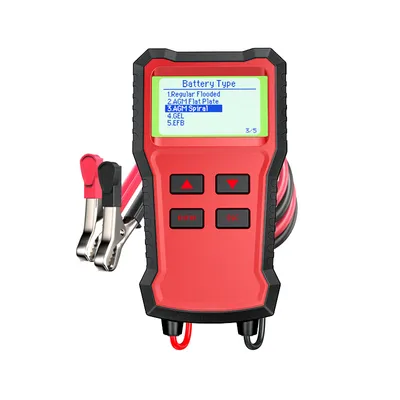
A non-affiliate example covering battery, starting and charging checks.
Check the exact chemistry and rating. It cannot locate every parked electrical drain.
View capabilities and limitations →Start with what happened and what you need to check. You may already have a suitable tool, or prefer to have a shop inspect the car.
See what to check →Battery + cranking — Choose the link to see matching testers. You can change or clear these filters at any time.
Show matching testers →Sources checked: . This is also the local page editing date, not the publication date of the source.
Cold-weather capability and preventive inspection; historical callout totals are not used as this year’s forecast.
How prior heat-related deterioration can become apparent in winter; not a temperature-only replacement rule.
Do not jump or charge a battery suspected of freezing or leakage; seek qualified assessment.
Separate charge state, health and battery-appropriate testing; not a universal pass/fail table.
Battery type, rating and connection context matter before interpreting a reading; not a generic repair procedure.
Post-jump inspection and discharge versus deterioration; follow the exact vehicle manual for connection procedures.
Scope: 12V starter or auxiliary lead-acid batteries, not EV high-voltage traction or lithium-battery work. Age, SOH, SOC, CCA ratio or resistance alone does not decide replacement. Product capability evidence remains on each product page; this is source-based guidance, not our hands-on testing.